
What Is IoT? Explained for Kids (With Examples They'll Get)
Last updated: 17 June 2026
Quick answer: IoT stands for the Internet of Things. It means everyday objects, like a lamp, a doorbell or a watch, are connected to the internet so they can send and receive little messages. That lets them share information and work together without you doing every step by hand.
You have probably heard a grown-up say a gadget is "smart". A smart speaker, a smart watch, a smart doorbell. IoT is the idea behind all of those. It is a short way of saying Internet of Things.
Here is the plain-English version: it is a way for ordinary objects to talk to each other and to the internet. They swap small bits of information, like "the front door just opened" or "the room is getting cold". You do not have to be there to make it happen.
What does the "Internet of Things" actually mean?
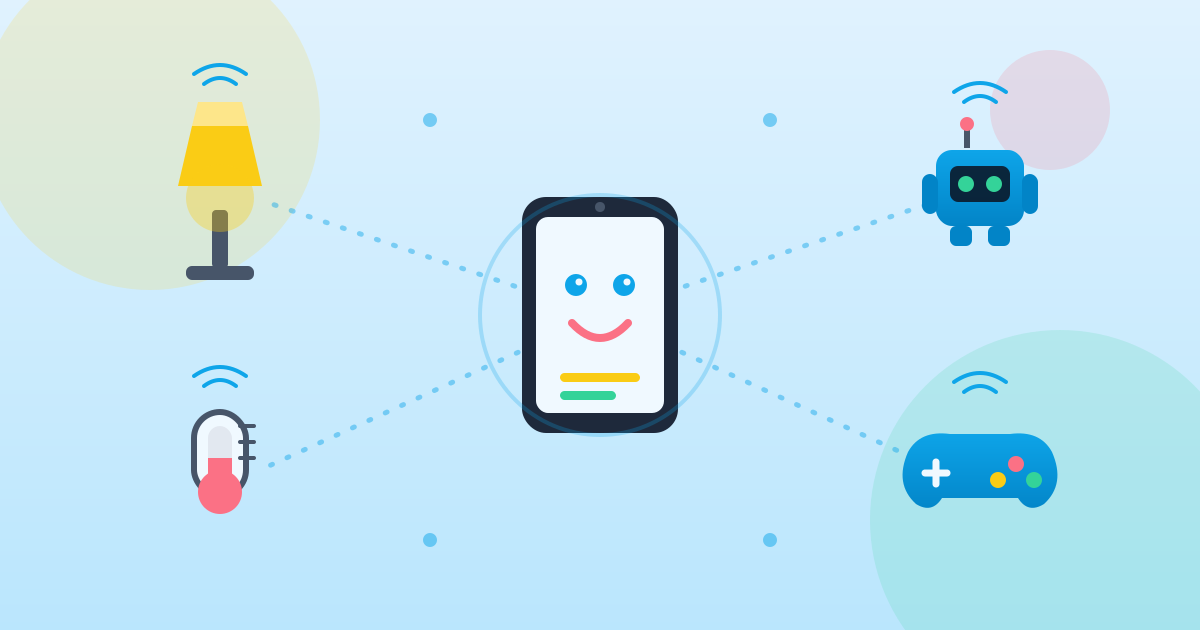
The internet used to connect mostly computers and phones. With IoT, all sorts of things join in too: a watch, a fridge, a garden sensor, a robot. The "things" are the everyday objects. The "internet" is the network that lets them send messages to each other.
Think of it like passing notes in class, except the notes are tiny pieces of data and they travel over Wi-Fi instead of across the room.
How does a thing become "smart"?
A smart object usually needs three jobs done, and none of them are magic.
First it has to sense. A sensor notices something, like temperature, movement or light. A sensor is just a part that measures the world and turns it into a number.
Next it has to think. A tiny computer chip decides what that number means, for example "25 degrees is warm, so turn the fan on".
Then it has to talk. The object sends a message over the network, or does something itself, like switching a light on.
That sense, think, talk loop is the heart of every connected gadget, from a cheap hobby sensor to a big factory machine.
Everyday examples kids will get
| Smart thing | What it senses | What it does |
|---|---|---|
| Smart watch | Your steps and heartbeat | Shows your activity on a screen |
| Smart doorbell | Someone at the door | Sends a video to a phone |
| Smart light | A message from an app | Turns on or changes colour |
| Soil sensor in a garden | How wet the dirt is | Reminds you to water the plants |
Notice the pattern: each one senses something, makes a small decision, then shares it. That is all IoT really is, repeated in lots of clever ways.
Why is IoT a big deal?
When things can talk, they can help each other. A weather sensor can tell a garden when to water itself. A heater can warm a room only when someone is home, which saves power. People use IoT in homes, farms, hospitals and cities. It is also a genuinely fun thing to build, because you get to make objects in the real world react to you.
Can a kid build their own connected gadget?
Yes, and it is a great first project. A simple one is a light that turns on when a room gets dark. You connect a light sensor and a small LED to a tiny computer board, then write a few lines of code that say "if it is dark, switch the light on".
Safety first: always build with low-voltage parts only (the small battery-powered kind), never anything that plugs into the wall, and have an adult nearby while you work.
At Incendio, our IoT for kids classes are all about making things talk. They are taught live online by working engineers, they are beginner-friendly, and your child builds real connected projects step by step, no prior experience needed.
Curious to see your kid turn an ordinary object into a smart one? You can enrol in a live online class whenever you are ready.
Frequently asked questions
What does IoT stand for?
IoT stands for the Internet of Things. It describes everyday objects, like watches, lights and doorbells, that connect to the internet so they can send and receive small messages. This lets them share information and work together without a person doing every single step.
What is an example of IoT a kid would know?
A smart watch is a clear example. It senses your steps and heartbeat, works out what they mean, then sends that information to a phone or app. A smart doorbell that films a visitor and pings a phone is another one most kids have seen.
Is IoT hard for kids to learn?
No. The core idea, sense, think, then talk, is simple, and beginners can build a small connected project early on. Incendio's IoT classes are beginner-friendly and taught live online by engineers, so kids learn by building real things with guidance and no prior experience.