Fleet Management IoT Platform
Multi-tenant vehicle telemetry with CAN-integrated devices and near-real-time dashboards.
Read case study
Capability
Device fleets that stay online, from silicon to cloud. We design the devices, write the firmware, run the connectivity, build the ingest pipeline and the dashboards your operations team actually uses - one Melbourne team accountable for the whole loop.
Scope
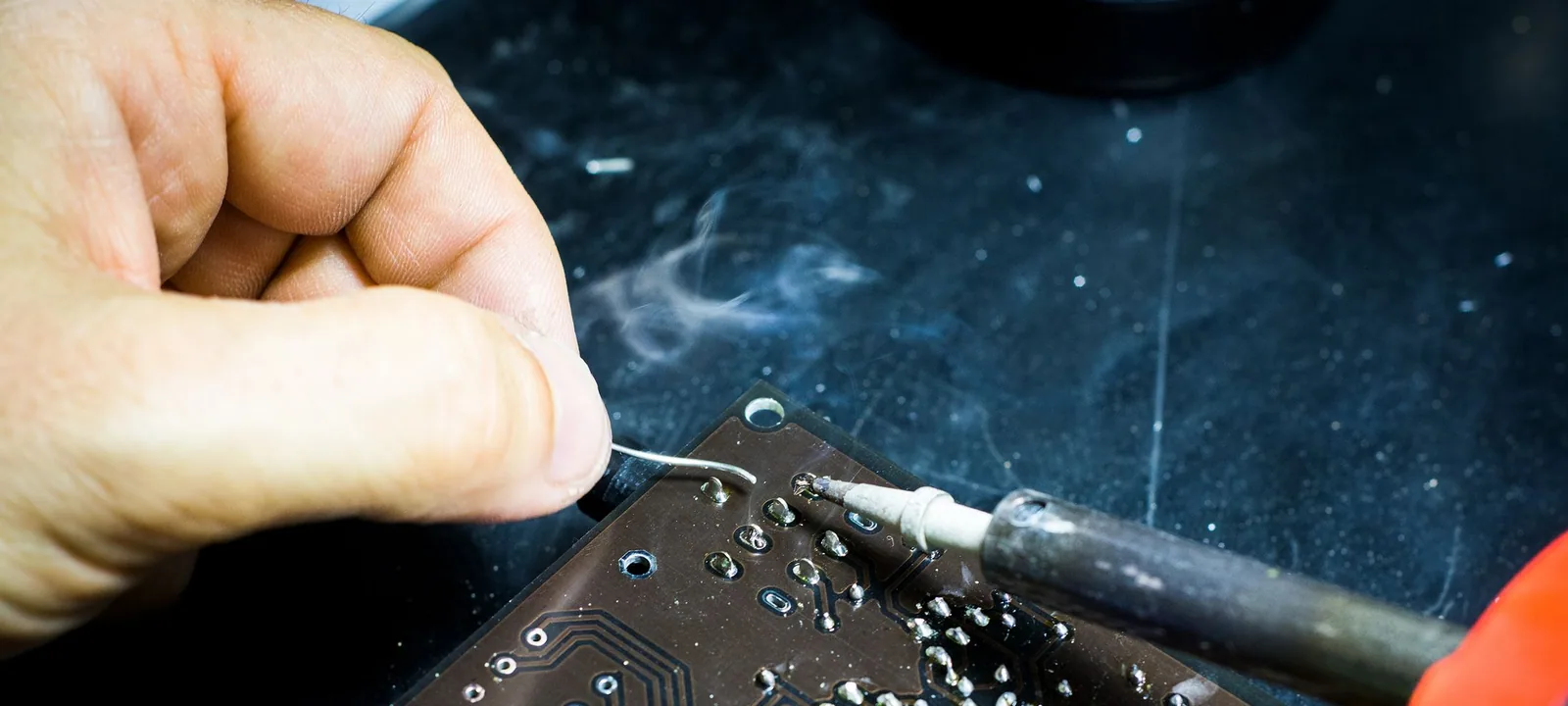
IoT is only useful when the whole loop works: a device that runs on the power it has, a link that survives its environment, a cloud that ingests reliably, and a dashboard people actually open. We build the whole loop because most IoT programs fail at the seam between one of these layers - and no single-layer vendor can fix it.
Outcomes
The point of an IoT program is not devices in a datasheet - it is data your operations team makes decisions on. Across the fleets we have shipped:
Devices we designed run on farms, streets, factory floors and 13 kV substations with cellular, LoRaWAN and hybrid links - and the offline-first firmware and store-and-forward paths that mean bad connectivity is a delay, not a data loss.
Fleet onboarding through a scripted factory process, keys generated per device, and cloud registration automated - because typing serial numbers into a portal at unit 100 is a failure mode.
Interfaces designed for the person who owns the outcome, not the person who owns the datasheet. Alerts that are actionable, not noise. Historic views for the auditor.
Our ingest and storage decisions are made with 10x growth in view. Time-series backends, batched ingest, and message-queue architectures that do not fall over on the first big rollout.
Process
Four phases with a real deliverable at each gate - you always know what you paid for and what ships next.
PHASE 01
We start from the constraint that binds - power, latency, thermal, certification - and design backwards from it. You leave with a written architecture, a budget range and the risks named, whether or not we build it.
PHASE 02
Schematics, mechanical and firmware architecture proceed in parallel. High-risk blocks get simulated or breadboarded before the full layout commits.
PHASE 03
Iterative revisions against real bench and field testing. You see every revision, not just the last one. Integration is continuous, not a phase.
PHASE 04
Pilot in the field, closure with the contract manufacturer, production test procedures, and a commissioning-grade handover pack.
Technologies
The platforms we reach for most. If a project needs something not on this list, we say so - the tool is chosen for the constraint, never to fit our habits.
Industries
Farm sensor networks, autonomous hydroponics, remote irrigation control.
Plant-floor telemetry, OEE dashboards, condition monitoring.
Street-scale sensing networks with mesh and cellular hybrids.
Grid instrumentation, meter fleets, battery-storage telemetry.
Deliverables & IP
Every IoT program hands over: device design files (schematics, layouts, mechanical), firmware source with OTA tooling, provisioning scripts and factory keys, cloud infrastructure as code (Terraform or vendor CDK), dashboards as configuration (Grafana JSON, PowerBI packs), API documentation, runbook for common failure modes, and a device-management playbook. All foreground IP transfers on payment.
Case studies
Every entry links to the full case study - constraints, what we built, and what it measured afterwards.
Multi-tenant vehicle telemetry with CAN-integrated devices and near-real-time dashboards.
City-scale mesh + cellular fleet for street lighting and environmental sensing.
Ultra-low-power loggers with store-and-forward through intermittent cellular.
Compliance
Every Australian IoT device carries the RCM; radio components add ACMA class-licence obligations. We design the radio hardware and firmware to sit inside those obligations - channel plans, duty cycles, transmit power - and we run pre-compliance emissions checks before booking chamber time.
Cloud-side, we design for the privacy expectations of the data class (Australian Privacy Principles for personal data, sector obligations for utility or medical telemetry) and put encryption at rest and in transit as the default, not the upgrade. For industrial deployments we align with IEC 62443 principles for OT-side security - segmented networks, least-privilege device credentials, and audited access to control-plane surfaces.
FAQ
Why Incendio
Because most IoT programs fail at a seam - between the device and the network, between the network and the cloud, between the cloud and the dashboard. We hold every layer of that stack in one team, so when something breaks in the field there is one number to call and one team debugging - not four vendors pointing at each other. The proof is public: open our live demos and drive them.
Related practices: embedded systems development, cloud software development, industrial automation, edge AI.
Start
A latency budget, a power budget, a certification date. We reply within one business day - and we’ll say so if we’re not the right team.